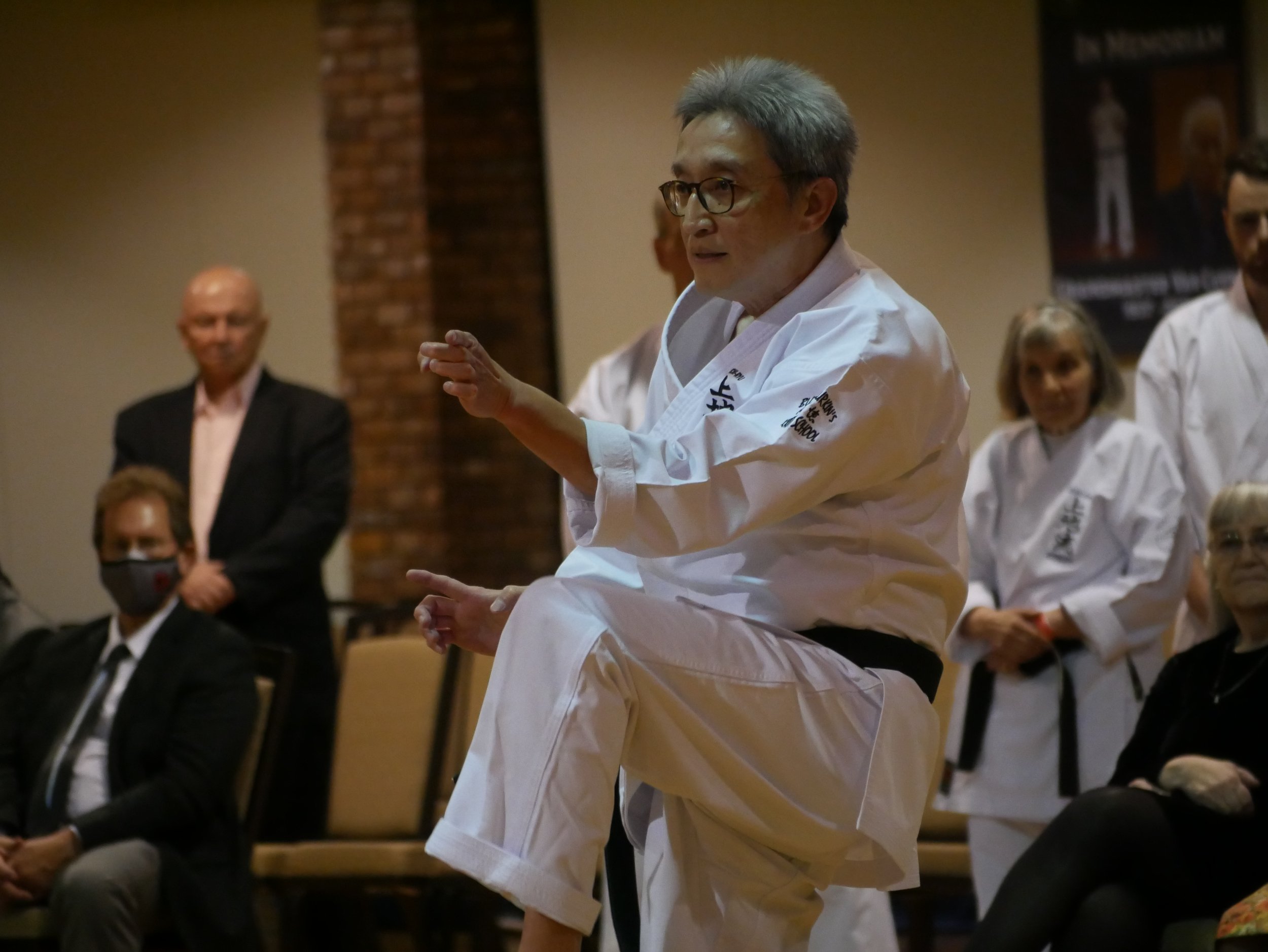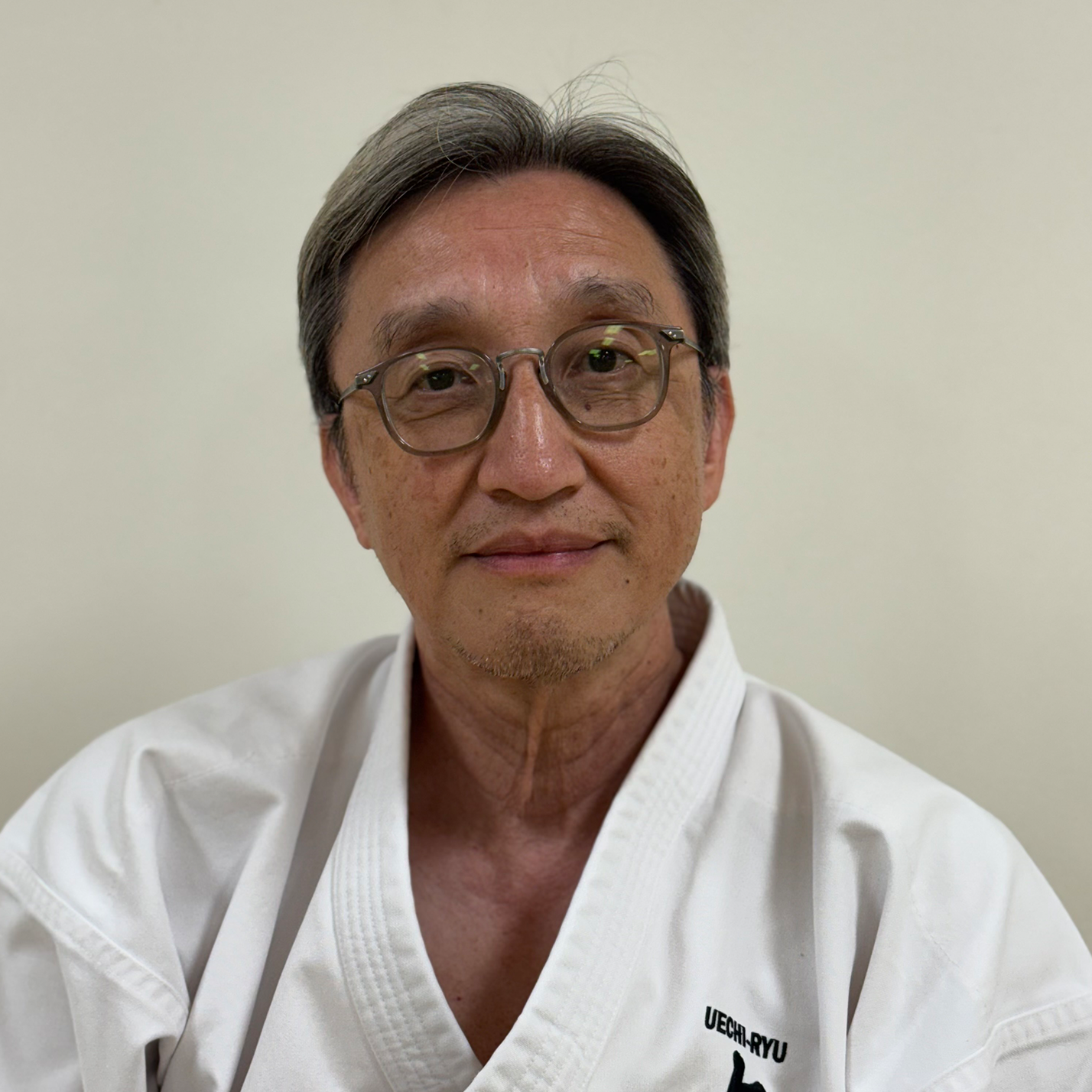
Raymond Lee
Rokudan (6th Degree Black Belt)
Testing for Nanadan (7th Degree Black Belt) at the 2026 UechiCon!
Sensei: Buzz Durkin
Uechi Training since 2001
When I first joined the dojo, it was at the recommendation of a friend. At the time, I thought karate was simply another form of self-defense from Japan. As I began training, I discovered that Uechi-Ryu had much deeper roots than I initially understood. Its lineage can be traced back to China, and three of its kata are directly from that tradition. The more I learned, the more my interest in the art grew.
As I progressed through the years, I began to realize that karate is not only about collecting techniques, but about refining them.
More recently, as I prepared for this next stage of training, a senior instructor pointed out something I had not fully recognized myself. Over time, I had gradually added my own nuances and interpretations into the kata.
One of the comments I received was that my kata is very “Ray Lee.” I understood exactly what that meant. After many years of training, my personal habits and preferences had naturally found their way into how I performed my kata.
That observation led me to reflect on an important lesson. Every movement in a kata exists for a reason, and it should be performed in its simplest and most efficient form. Adding nuance without fully understanding the original application and intent can gradually shift the movement away from its core purpose.
As I began breaking down each kata and returning to its simplest and most efficient form, I developed a deeper appreciation for the original movements. In many ways, this experience reflected the saying, “review the old to understand the new” (温故知新). By returning to the basics, I found a deeper understanding of the art than I had before.
Today, I find myself returning more and more to the fundamentals of karate. The longer I train, the more I appreciate simplicity, structure, and clarity in movement. Returning to the basics does not mean losing expression, but rather understanding it more deeply so that it can be applied with greater awareness and intent.
Over time, I have come to value efficiency over excess. Whether in kata or kumite, I find that timing, distance, and rhythm often matter more than strength alone. Power, when it appears, should feel natural rather than forced.
Each time I revisit the fundamentals, I discover something I did not notice before. What once felt familiar often reveals a deeper layer of understanding when viewed through experience.